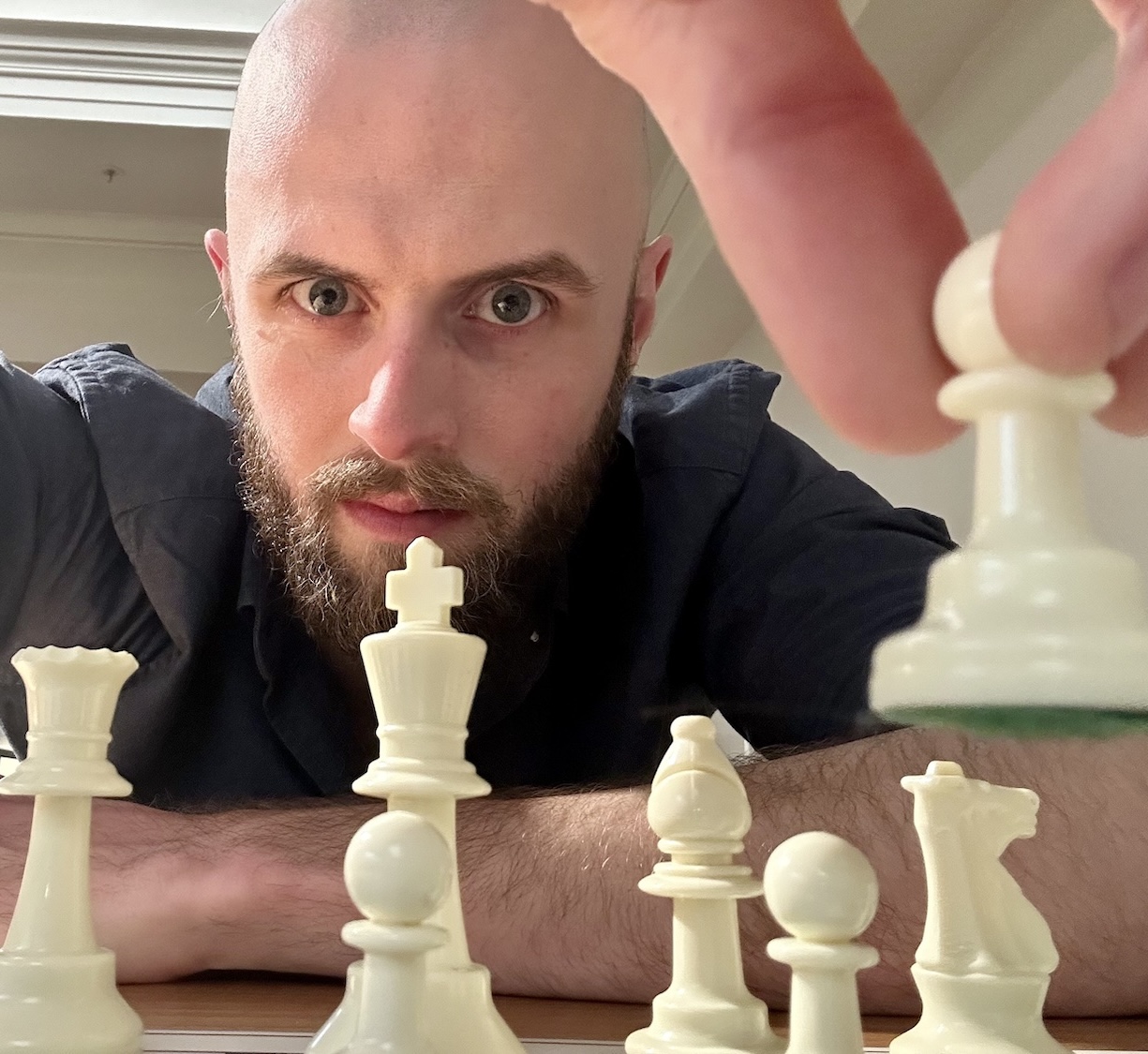
Picture this.
You start up an online game. You get White. You play the start of your favorite opening. Your opponent picks one of the main responses. You're comfy, you know this line.
You play your next move, they play theirs. Then 5 moves in, your opponent does something weird. They put their Queen on a strange square.
You haven't seen this before. You've studied your opening pretty well and this isn't part of any course you've seen.
It's odd. It seems pointless. It can't be good. To quote James Canty III, "That's not a move!" That's when the trouble starts.
Adult improvers tend to over- or under-appreciate these weird moves. There's three common responses I've seen in my work.
First, there's the dismissive, "that was weird."
We give the move almost no thought, and just continue with whatever we would normally do in our opening anyway.
Second, there's the overconfident, "that's not in my course so I must be winning now."
We assume we must be ahead, not really considering the purpose of the weird move. We get aggressive, keen to capitalize on our perceived advantage.
Third, there's the panicked, "Oh no, what's that?"
Here we chew up ages of time, trying to find the trap or the trick. We let the weird move disrupt our flow and become paranoid.
The first two are the most common. But the third one rears its head in over-the-board tournament games. None of these responses are particularly useful.
The problem with each of them lies in how they affect our conceptualization of the position.
As we play a game of Chess, we keep track of the position in our working memory. Our eyes pass information to our brain, and our brain stores what it recognizes about dynamics, plans, threats. Then we use that information as the basis for our decisions.
If some element of the position isn't in our working memory, we don't have access to it when making our decisions. And what goes into our working memory is defined by our attention.
That's the essence of conceptualization. It's about how your brain is engaging with the complex information of Chess positions, current, future, whatever.
Before we jump into how each of these responses affects us, and what we should do instead, let's explore what a weird move does in our working memory.
If you're a Sicilian Dragon player and you're 5 moves into a Sicilian Dragon, your working memory is very comfortable.
When we're familiar with something, our brains don't have to work quite so hard. You've seen this position enough times that you have a detailed understanding of it in your long term memory.
Our working memories can hold around seven pieces of information in them at once, seven slots. And because you know this position well, your brain can hold it all in just one or two of those slots. It's comfortable, and doesn't take much effort.
Then your opponent plays a weird move. They haven't immediately blundered a piece or anything, it's just odd. You haven't seen it before. It changes things in the position.
A single piece on a different square can change everything. And that's difficult to handle for our brain.
Suddenly our working memory needs to work harder to build an accurate concept of the position. It can't rely on that pattern stored in long-term memory.
In fact, that familiarity with the normal position can start to work against us, stopping us from fully taking in the implications of this odd move.
Normally, the position works one way, but the weird move changes things, big or small. It knocks our working memory and our conceptualization off-kilter.
Now let's look at those reactions again and what's happening in your brain when they occur.
The most common one I see with sub-1000 rated players is the "That was weird" response.
Your opponent plays the weird move, and you just continue on with whatever you were doing.
Our brains are naturally lazy, and they'd prefer not to work hard. It takes effort to really look at a weird move and notice how it changes our familiar patterns. Sometimes, through no real fault of ours, our brains simply don't want to do it.
Sometimes our brain takes shortcuts. Instead of reviewing how the weird move changes the position, taking effort and filling up more slots in our working memory in the process, we find ourselves almost ignoring it. Continuing on just as before.
We know the weird move happened – if someone asked us where that piece was now, we'd be able to tell them – but we're still making decisions based on the patterns we have in long-term memory. That's a recipe for disaster, and it eventually comes back to bite us.
Some of us, when facing weird moves, will get overconfident.
We've put time and effort into our opening study, and that move wasn't in the course. If it's not in the course, it must be bad, right? This is dangerous thinking.
For starters, that judgment is based on our course and not on the position. If we evaluate the position itself, we don't notice a huge advantage. But we figure we must be better and try to capitalize anyway.
We've assumed we have the upper hand and continue on as if we actually do.
The information is being stored in our working memory correctly, we're assessing the position. But we're assessing it through the lens that we should be ahead. This makes us very likely to miss our opponent's ideas and threats. Disaster.
Lastly, we have the panicked "Oh no, what's that?"
At first glance, this seems better than the other two, and it is to a certain extent. At least with this one we are paying the move some attention. We're assessing the ways it changes the position, the ways it affects our plans and our prep.
But we've gone too far the other way. We've fixated on the move. We feel defensive, spooked, uncertain. We assume we've missed something, or that we're about to miss something. And we play extremely cautiously as a result.
Our working memory fills up, focused entirely on that move. We're likely to let go of other details in the position, miss opportunities, forget ideas. Our sense of the position warps to being entirely about the weird move.
None of these responses are healthy for our game or useful for our brain. But there is one response that I've found useful with my coaching clients.
The best antidote I know to all of these issues is to identify the "side quests" of weird moves.
The move might seem weird now, but what could it enable or set up if a couple of things were different in the position?
Maybe that "weird" queen move could actually create a mate threat on h2 if all those pawns in the middle went away. Maybe that confusingly placed bishop would actually be eyeing off our king if we castled queenside.
Suddenly the weird move holds an actual threat. Not one your opponent can act on yet, but one you should be aware of. One that's important to keep in mind as you're navigating the position.
Looking for the side quests tricks your brain into paying the right amount of attention to the weird move. To find a side quest, you need to see how the move interacts with the wider position, which means you're building a more accurate concept of the position in your mind. This helps you avoid all three of the issues I mentioned before.
In trying to justify the move, you're telling your brain, "this is important"! And your brain will listen.
Your job is to try to justify every move your opponent makes. If you can't possibly justify it, you're not looking close enough.
The justification may be distant, extremely unlikely to occur. It may be totally overshadowed by how big of a blunder the move is in a different way. But always try to find some justification.
Don't fixate on the move, just look for some reason why it might have happened. What could it possibly be doing?
Your opponent didn't make that move because they're stupid. It could be a blunder, it could be a mistake, but it had some purpose.
When you've built this habit, I guarantee you'll avoid a few major blunders, and find some classy punishments for your opponents as well.
Here's to the journey,
Aiden