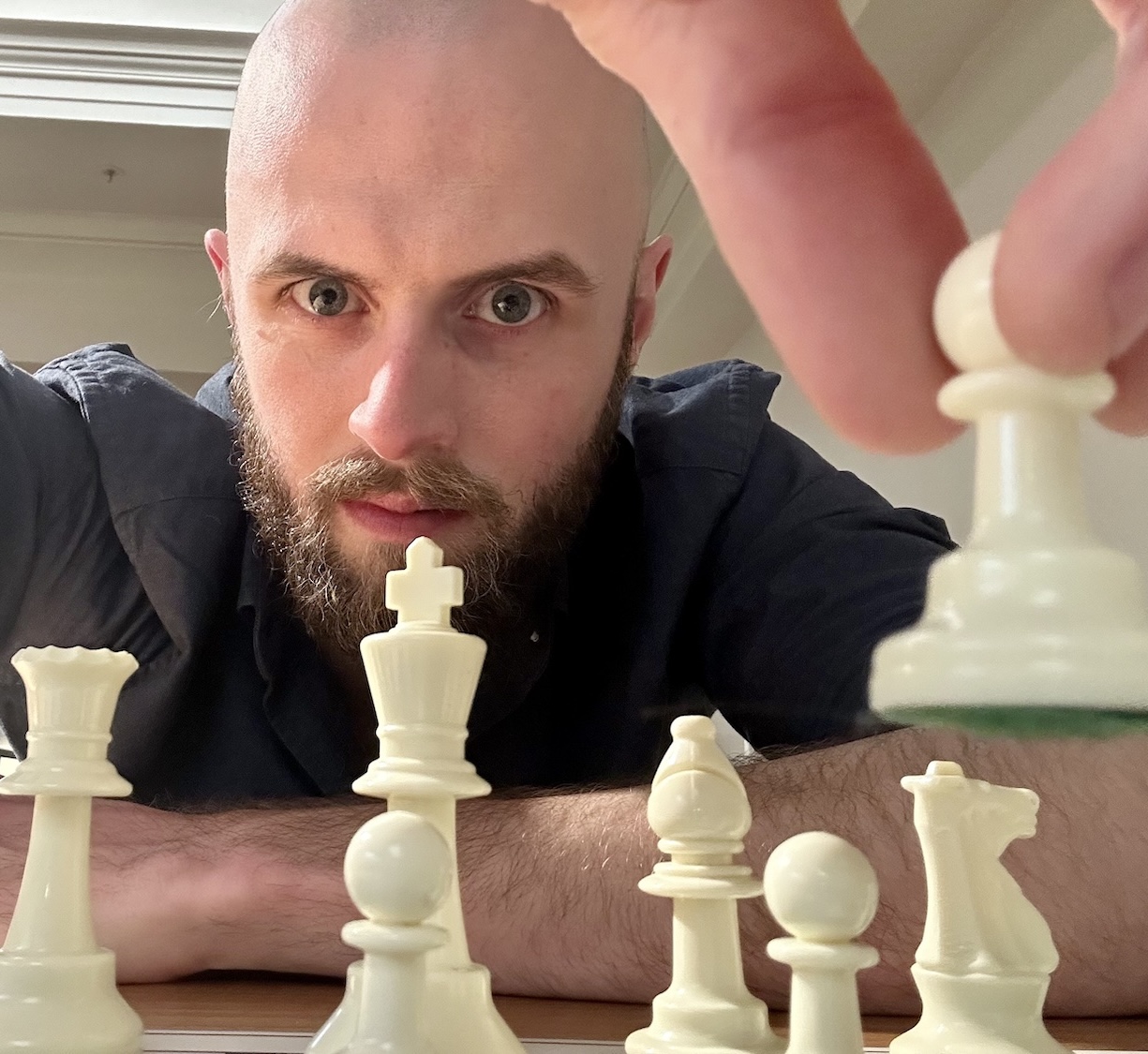
Over this series, we've discussed how our intuition works. How it's always on, offering suggestions, limiting our thinking, and jumping to conclusions. And how difficult it can be for the deeper thinking part of our brain to parse and resist its ideas.
It takes energy for us to fight it, and energy is precious.
As we discussed in Part 1, when you ask a Grandmaster about their intuition they will likely say it's a gift. It makes them much better players.
Their intuition is familiar with so many ideas, patterns, games, that they have a honed spidey-sense for most of the things that can happen in their games. Their intuition's suggestions are simply higher quality than ours.
We may never reach a point where our intuition is as honed as theirs, but we can certainly take steps toward it. We can make its automatic suggestions better. And the better its suggestions, the less energy we have to spend fighting them.
Here are 3 ways you can do that. I recommend you do all 3.
1. Burn in the patterns that matter
One of my guiding principles in life is the 80/20 rule. It's the idea that, regardless of what topic you're looking at, 80% of the outcome will come from roughly 20% of the causes. When it comes to Chess patterns, this is certainly true.
Some are just more common and more important than others. Knight forks, back-rank mates, pins; these decide a huge number of low-rated games. In those rating ranges, mastering those patterns has a huge impact.
If you learn the most common 20% of checkmate patterns, you'll find you use them in most of your games. But if you spend hours mastering the bishop-knight mate, you may use it in one game every 5-10 years.
(I've spoken with Grandmasters who have never had to use it in their whole careers.)
As you increase in skill and rating, the patterns get more complex, but there's still only a comparatively small number of them that decide most games.
Some patterns simply offer better value for the time invested to master them.
We want our intuition to scream at us when there's an opportunity to use one of these key 20% of patterns. And the only way we get that is to train it.
We could train it by completing thousands of random puzzles. But it will take ages before we've seen a key pattern enough times for it to stick.
It's much more efficient to pick the exact patterns we want to learn and review dozens of different positions and games that include that same pattern.
It's a simple 4-step process:
- Identify the pattern you want to learn. (A good coach or resource will help with this.)
- Solve dozens and dozens of positions that include that same pattern.
- Review games that were decided by that pattern.
- Revisit the pattern regularly.
That's the way to help your intuition master a pattern. After you've done that, your brain will spot that pattern a mile away.
If checkmate patterns are what you're after, the best resource I've found is the Checkmate Patterns Manual (Amazon | Chessable)
(I don't get any kickbacks for recommending this, I just think it's a fantastic resource.)
For tactics there are several great options, but a good place to start is the Lichess Puzzle Theme Browser.
Whatever resource you use, start thinking about which patterns you're teaching your intuition to recognize. Make sure you spend your time on the most valuable ones first.
2. Flip your board half the time
Many Chess players are far better at spotting their own tactical ideas than they are their opponent's. This boggles the mind of the players and their coaches – how can we be so good one way and so bad the other?
Through the lens of intuition it makes perfect sense.
99.9% of Chess tactics study materials have us looking at the board from the perspective of the color with the tactic! If the puzzle is White-to-move, we'll see it from White's perspective. If it's Black-to-move, we get Black's viewpoint.
Our intuition only learns to notice our own tactics, and not our opponents'. This is very shortsighted, and sets us up for failure.
The solution is simple — do 50% of your tactics training with a flipped board. Solve half your puzzles as if it is your opponent who has the tactic.
We want our tactical spidey-sense to fire not only when we have the opportunity, but also when we might be opening up an opportunity for our opponent. Both are critical, and most of us only train one.
While doing puzzles on Lichess, you can hit the F key to flip the board. On Chesscom, there's a little button with two arrows you can click.
If you're training with the resources in the Don't Move Membership or the Chess Visualization with Aiden Rayner podcast (Apple | Spotify), try conceptualizing from the other side of the board.
Get your brain used to finding the killer ideas for your opponent.
3. Pick your openings and stick to them
At its core, intuition is a sense of recognition. The automatic part of our brain spots something it thinks is familiar and reacts to it.
When we play an opening for a long while, we build familiarity and comfort with the plans and ideas within it. We know the sorts of things that occur in it, the positions we're likely to find, the tactics that may present themselves.
All of these provide a framework within which our intuition can start to thrive. The more we see, the more we understand, the better our intuition can become. When we change openings, we leave all of that behind and start from scratch.
If you want your intuition to work for you, you need to let it understand the patterns in your openings. Constantly switching makes this much harder for your brain than it needs to be.
With the right training, our intuition can become more an ally than a hindrance.
The issues never fully go away — we're human after all. But we can lessen them considerably.
Teach your intuition how to help you, and do it in ways it can understand. Show it the patterns it needs to know. Get it used to thinking about your opponent's tactical opportunities. And stick with your openings.
These points all boil down to the same thing:
Regularly expose your mind to the patterns that are likely to decide your games, and let your intuition become an expert in them.
Then, when your intuition screams something at you, it may have just found the winning move.
And there are few better feelings in Chess than having awesome tactical ideas leap into your mind out of nowhere.
Here's to the journey,
Aiden