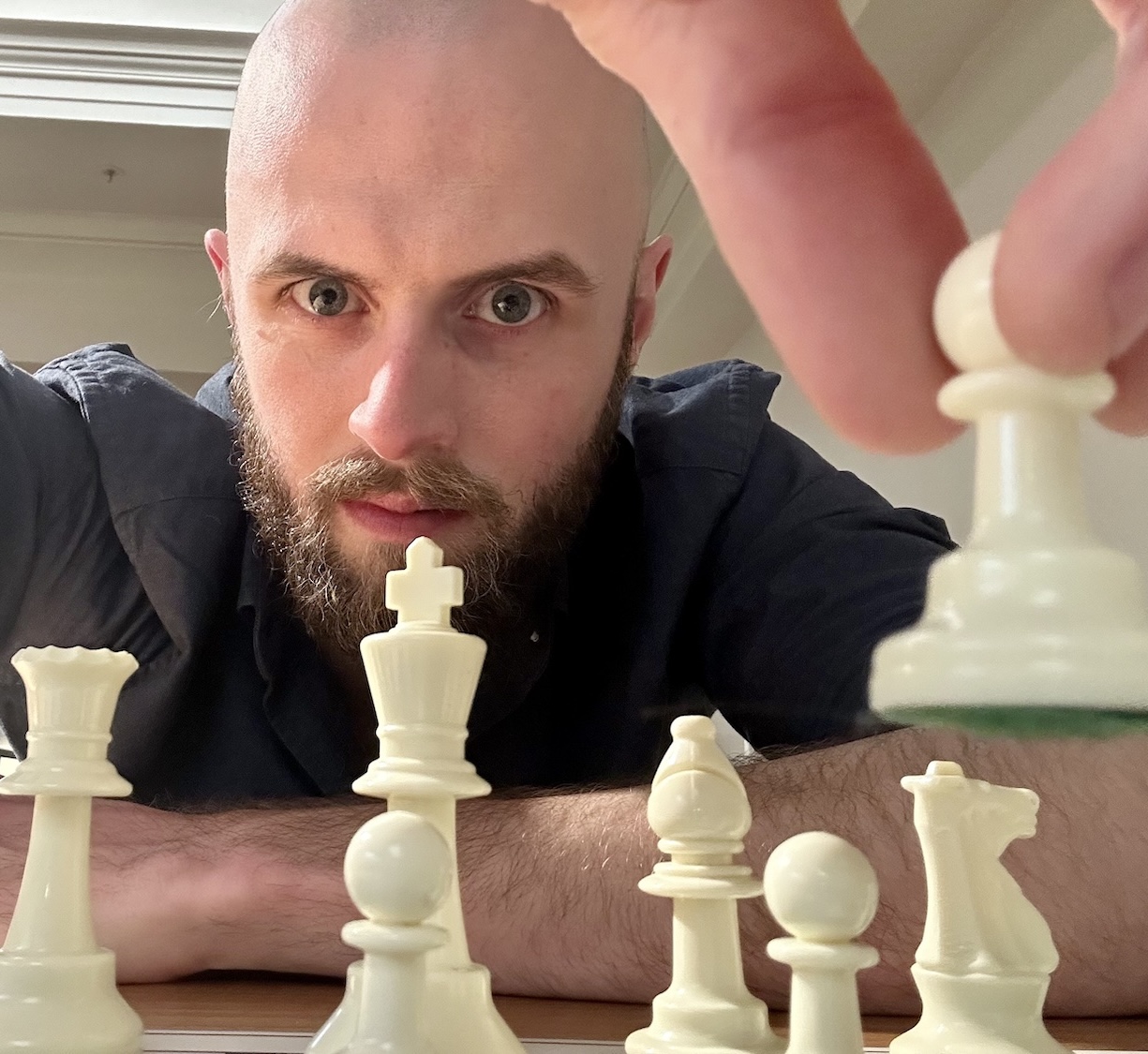
Is intuition a gift or a curse for our Chess?
Most masters I've spoken with have stated firmly and enthusiastically that intuition is a gift. An incredible gift.
It's the best part of their game. When they lean into it, more often than not, good things happen.
I can't relate.
For me, intuition is more often a curse. A handicap. Something I have to struggle against.
And it's the same for every adult improver I've spoken with and coached.
A Grandmaster has such a wealth of knowledge and experience. Various researchers estimate they have something in the realm of 50,000 "chunks" of Chess positions stored in their heads for easy access and recall.
When they look at a position, they see it through the lens of the millions of positions they've seen before. Their intuition alerts them to things they don't consciously see yet.
It shouts at them "there's something here". It's loud, it's insistent, and it can't be ignored.
The master doesn't want to ignore it. This is their biggest strength.
We don't have that collection of chunks in our heads. We don't have the years of Chess since childhood.
When we look at a position, we see it through the lens of our experience – which is vastly less than the masters.
But that doesn't stop our intuition from shouting.
For us, it's just as loud, just as insistent – but far less well informed.
Our intuition is always there, assessing the situation and loudly offering suggestions. Automatic and uncontrollable.
Often it's painfully wrong.
Here's a way to experience your own intuition at work. Please play along. You'll get way more out of this if you do.
Answer the following question from Shane Frederick's Cognitive Reflection Test:
A bat and a ball together cost $1.10.
The bat costs $1 more than the ball.
How much does the ball cost?
Take a second.
Do you have an answer?
Are you sure that's the answer?
Whatever answer you chose, I can almost guarantee one thing happened.
When you first read the question, some part of your brain yelled "10 cents!".
It was automatic and unbidden. It just happened. It popped into your brain by itself and it seemed very confident.
Some of you will have simply accepted "10 cents" as the answer and moved on.
Your intuition recognized the numbers $1.10 and $1, and assumed you needed the difference between them.
So it rapidly and automatically subtracted $1 from $1.10 and shouted "10 cents!".
Then it patted itself on the back for a job well done.
But "10 cents" is the wrong answer. It doesn't make sense.
If the ball cost 10 cents, then the bat would have to cost $1.10 by itself!
The correct answer is "5 cents", but it takes the deeper thinking part of your brain to work it out.
I've done this exercise with Grandmasters, mathematicians, engineers, and physicists and it's always the same. Their intuition loudly shouts the wrong answer at them.
Even if they do notice "10 cents!" is wrong, they still have a tricky time finding the correct answer. It takes effort.
While they're trying to calculate, part of their brain keeps shouting at them: "10 cents! 10 cents! 10 cents!"
Loud, insistent, automatic.
Not only do they need to find the right answer, they also need to fight against the wrong answer.
That complicates things.
The strangest part is this.
Even now that you know "10 cents" is wrong, your brain will still confidently shout it at you if you read the question again.
Seriously, try it.
It still happens when I read the question after 18 months of using it in my work.
"10 cents! 10 cents! 10 cents!"
That is your intuition at work.
It's loud, insistent, automatic, and totally unconcerned with truth or correctness. It simply notices a pattern and jumps to a conclusion.
In Chess, this tendency is to blame for many of our greatest brilliancies, but many more of our most painful brain farts.
It can help to think of your intuition as an enthusiastic friend who is rated 200 points below you.
They're always there, watching the game over your shoulder, looking at the position, jumping to conclusions, and loudly offering their suggestions.
You love your friend, you don't want to hurt their feelings or crush their dreams, so you can't tell them to shut up.
Most of the time, your friend plays about as well as you would. Every now and then, they even spot something you would have missed otherwise. 200 points doesn't make that much of a difference for most of the moves in a Chess game.
But, in critical moments, 200 points makes all the difference. It's in critical moments that our enthusiastic friend is the hardest to ignore.
Resisting our intuition's suggestions takes mental effort. When we're tired, distracted, or our seven slots of working memory are strained, our deeper thinking mind will often give up. It will cede power to our intuition entirely. We'll start to freewheel.
So we go for the Queen sacrifice that obviously doesn't work. We move our knight even though it was the only thing preventing checkmate.
Or we play that first candidate move we saw, despite already deciding it was a bad move.
"10 cents! 10 cents! 10 cents!"
For adult improvers, our intuition is more curse than blessing. It leads us astray more often than it helps. For every stunning tactic it suggests, it gives us many more ideas for one-move game ruiners.
Over a Chessboard, our intuition can feel like an enemy to be beaten.
But it's not. It truly is a friend. One of the best you have.
It's the same part of your brain that automatically scans for threats when you enter a room. The part that spots your children in a crowd. The part that notices your spouse is upset, even though you can't put your finger on how you noticed it.
This loud, insistent, automatic part of your brain is designed to keep you safe. To help you notice the things that matter to you. To help you act quickly when you need to.
And it does its job admirably.
Our goal is not to beat it, but to tame it. Train it. Help it to work for us and not against us.
That's what this series is about. I can't wait to dive in.
I'll see you in Part 2.
Here's to the journey,
Aiden